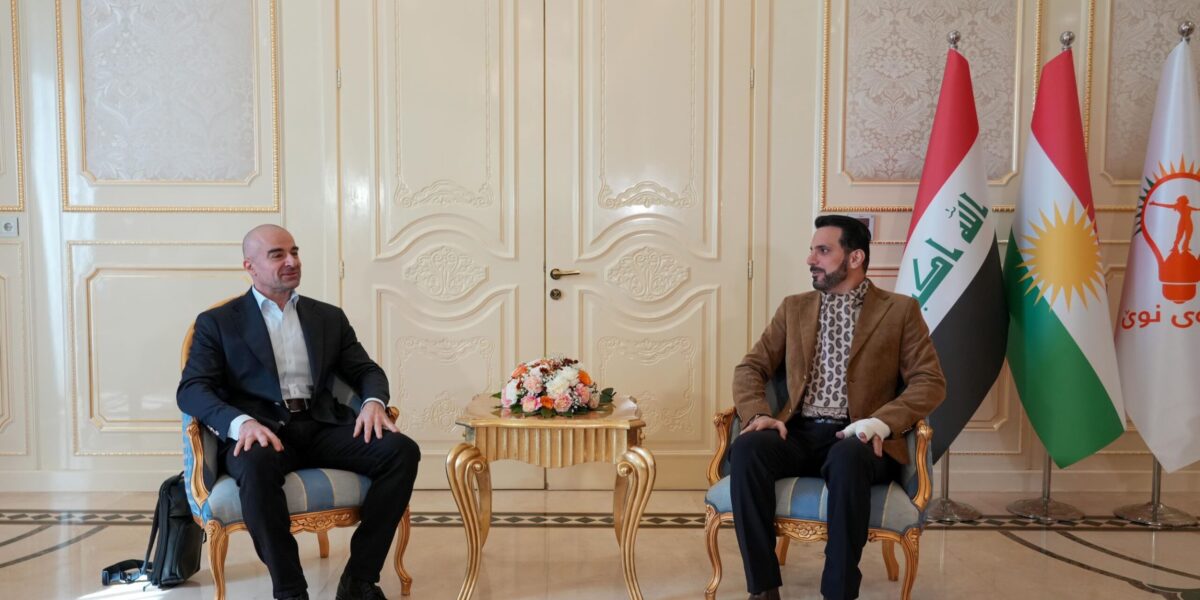
Slemani — The Patriotic Union of Kurdistan (PUK) and the New Generation Movement (NGM) to formally announce the creation of a joint parliamentary alliance on Thursday, marking one of the most significant political realignments in the Kurdistan Region since the 2024 parliamentary elections.
The coalition, branded “Balance and Revival,” is scheduled to be signed at Shari Jwan Hotel in Sulaymaniyah by PUK President Bafel Talabani and New Generation founder Shaswar Abdulwahid.
Although both parties have described the alliance as comprising 38 lawmakers, the precise number of parliamentarians who have formally joined the unified bloc has not been independently verified.
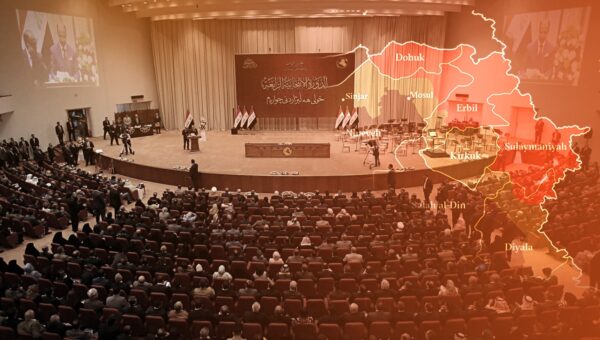
The agreement follows approximately five months of negotiations and is expected to strengthen both parties’ influence in an increasingly fragmented parliament, where no political force commands an outright majority.
From Political Rivals to Strategic Partners
Beyond its parliamentary significance, the alliance represents a fundamental shift in Kurdish politics.
Since its establishment, New Generation built its political identity on opposition to both the PUK and the Kurdistan Democratic Party (KDP), portraying itself as a reformist alternative to the Kurdistan Region’s traditional ruling parties. The movement repeatedly accused both parties of concentrating political power, weakening public institutions, and failing to implement meaningful reforms.
Against that backdrop, Abdulwahid’s decision to align with the PUK marks a notable departure from New Generation’s long-standing political narrative.
Political observers argue that the partnership reflects less an ideological reconciliation than a pragmatic response to the post-election parliamentary landscape. Following the 2024 elections, coalition-building has become increasingly necessary for parties seeking to influence legislation, parliamentary leadership, and government formation.
For New Generation, joining forces with the PUK substantially increases its institutional influence after years of operating primarily as an opposition movement. For the PUK, the alliance broadens its parliamentary coalition, enhances its bargaining position, and strengthens its leverage during negotiations over the Kurdistan Region’s next government.
Timing Raises Political Questions
One of the most closely scrutinized aspects of the alliance is its timing.
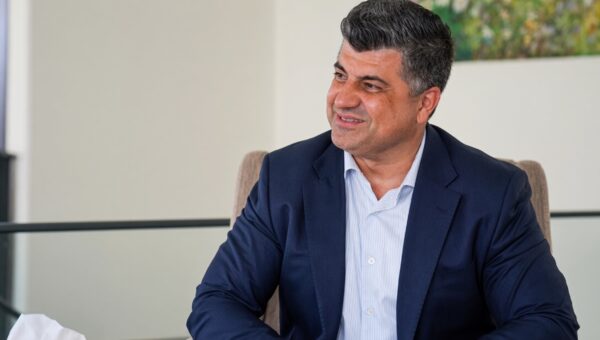
Abdulwahid announced his proposal for cooperation with the PUK only days after being released from detention in Slemani, where he had spent more than five months in custody.
Because he was detained in an area where the security and judicial institutions are widely regarded as operating within the PUK’s sphere of political influence, the sequence of events has fueled speculation regarding whether his release contributed to the subsequent rapprochement.
However, there is no publicly available evidence indicating that Abdulwahid’s release was linked to a political agreement with the PUK. Neither party nor the relevant judicial authorities has suggested that his release formed part of any negotiated arrangement.
Nevertheless, the timing has generated debate among New Generation supporters, many of whom regarded the movement’s independence from both the PUK and KDP as a defining feature of its political identity.
Internal Reservations Surface
The announcement has also been accompanied by signs of unease within both parties.
At least one PUK lawmaker was absent from a recent parliamentary bloc meeting chaired by Qubad Talabani, a senior PUK leader and brother of Bafel Talabani. Although no official explanation was provided, the absence prompted speculation about differing views within the party regarding the alliance.
Meanwhile, reports circulating within Kurdish political circles have suggested that several New Generation lawmakers have privately expressed reservations about the agreement. According to those reports, some legislators oppose the coalition but have refrained from publicly voicing their concerns. Those claims have not been independently verified, and neither party has publicly addressed them.
Despite the reported internal reservations, both leaderships have proceeded with the agreement, presenting it as a strategic partnership designed to enhance parliamentary coordination and legislative effectiveness.
Parliamentary Objectives
According to the two parties, the alliance seeks to improve coordination in a legislature where no single political force controls a majority.
Its stated objectives include facilitating legislation, strengthening parliamentary oversight of the Kurdistan Regional Government, combating corruption, coordinating positions on senior parliamentary appointments—including committee leaderships and the speakership—and advancing common positions on issues affecting public governance.
Supporters argue that the alliance could improve legislative efficiency and create greater political balance, while critics question whether cooperation between former political rivals may dilute New Generation’s role as an opposition movement.
Implications for Relations with the KDP
Although neither party has characterized the alliance as being directed against the KDP, the agreement significantly alters the parliamentary balance.
The unified bloc strengthens the negotiating position of both parties during discussions over legislation, government formation, and institutional appointments, reducing the KDP’s ability to negotiate separately with each party.
Political analysts generally interpret the alliance not as an anti-KDP coalition but as an effort to increase the PUK and New Generation’s collective leverage in future political negotiations.
Because the alliance still falls short of an outright parliamentary majority, cooperation with other parties will remain necessary for passing legislation and forming the next regional government.
Growing Coordination in Baghdad
The partnership also reflects broader political coordination extending beyond the Kurdistan Region.
In recent months, the PUK and New Generation have increasingly cooperated during negotiations in Baghdad. Their coordination coincided with the PUK’s successful effort to secure Iraq’s presidency and New Generation’s participation in the federal cabinet through the Ministry of Environment.
Analysts believe the parliamentary alliance could further strengthen cooperation between the two parties at both the regional and federal levels, particularly during negotiations over constitutional, financial, and administrative issues between Erbil and Baghdad.
Strategic Shift Rather Than Political Reconciliation
While the alliance represents one of the most consequential political developments in the Kurdistan Region in recent years, analysts emphasize that it should be understood primarily as a strategic partnership rather than a comprehensive political reconciliation.
The agreement reflects a convergence of immediate political interests—expanding parliamentary influence, strengthening negotiating leverage, and shaping the formation of the Kurdistan Region’s next government—rather than the resolution of longstanding ideological differences.
Its long-term durability will depend on whether the two parties can maintain internal cohesion, deliver tangible legislative achievements, and reconcile the expectations of supporters with the practical compromises required by coalition politics.
For New Generation, the alliance marks a transition from anti-establishment opposition toward institutional participation. For the PUK, it represents an opportunity to consolidate parliamentary influence and broaden its political alliances. Whether the partnership evolves into a lasting political realignment or remains a tactical arrangement will likely become clearer during the formation of the Kurdistan Region’s next cabinet and the legislature’s upcoming sessions.