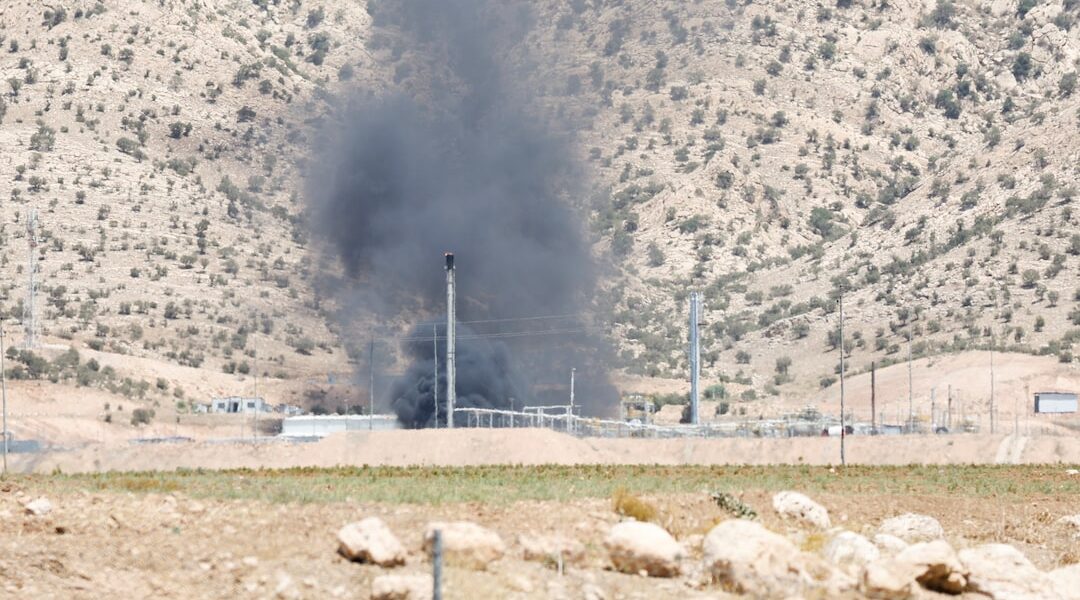
Slemani — More than a month after Baghdad and Erbil agreed to strengthen security for the Kurdistan Region’s oil infrastructure, the federal government has yet to deploy air defense systems or radar capabilities to protect the Region’s oil fields from continued drone and missile attacks, according to a source from the Ministry of Peshmerga.
The source said that despite the security agreement reached between the two sides, Baghdad has not taken practical measures to safeguard oil facilities, even as repeated drone and missile attacks continue to pose a serious threat to the Kurdistan Region’s energy sector.
According to the source, no radar systems or air defense equipment have been delivered to the Kurdistan Region following the security understandings. Some international oil companies operating in the Region rely on their own early-warning radar systems to alert personnel of incoming threats, while the only operational military system capable of intercepting drones is that of the international coalition.
The Ministry of Peshmerga source said attacks targeting the Kurdistan Region generally fall into two categories. The first involves strikes launched by Iran against bases and headquarters of Iranian Kurdish opposition groups. The second consists of attacks carried out by armed groups targeting coalition forces and their facilities in the Region.
The continued absence of additional defensive capabilities comes as the Kurdistan Region seeks to restore confidence among international energy companies and expand oil production following repeated security incidents affecting the sector.
On June 14, 2026, a high-level Iraqi security delegation headed by Iraqi Armed Forces Chief of Staff Lt. Gen. Abdul Amir Rashid Yarallah visited the Kurdistan Region for talks with Kurdish officials. During the meeting, both sides agreed to develop a comprehensive security plan to protect oil companies and critical energy infrastructure from attacks. The initiative was intended to facilitate the resumption of operations by international oil companies and support the recovery of the Kurdistan Region’s oil exports, which have faced repeated disruptions amid ongoing regional security tensions.
On June 14, 2026, a high-level Iraqi security delegation headed by Iraqi Armed Forces Chief of Staff Lt. Gen. Abdul Amir Rashid Yarallah visited the Kurdistan Region for talks with Kurdish officials. During the meeting, both sides agreed to develop a comprehensive security plan to protect oil companies and critical energy infrastructure from attacks. The initiative was intended to facilitate the resumption of operations by international oil companies and support the recovery of the Kurdistan Region’s oil exports, which have faced repeated disruptions amid ongoing regional security tensions.