SLEMANI — President of the Kurdistan Region Nechirvan Barzani, Prime Minister Masrour Barzani and senior Kurdistan Region officials have strongly condemned a drone attack targeting the private office of the Kurdistan Region’s prime minister and the residence of the head of the Parastin (Protection and Intelligence) Agency, describing the incident as a dangerous escalation and a serious threat to the security and stability of the Kurdistan Region.
According to Kurdistan Counter-Terrorism, two explosive-laden drones were launched from across the Iranian border early Monday, August 17, targeting the two locations in the Pirmam district of Erbil province. No casualties were reported.
The attacks prompted strong reactions from the Kurdistan Region’s presidency, government and political institutions, with officials calling on Baghdad to fulfill its constitutional responsibilities to protect Iraq’s sovereignty and security.
Nechirvan Barzani condemns attacks
According to information obtained by Channel 8, Nechirvan Barzani strongly condemned the attacks on the prime minister’s office and the residence of the head of the Parastin Agency.
The Kurdistan Region president described the attacks as a dangerous escalation and said such actions were completely unacceptable.
Barzani also called for the protection of the sovereignty and territorial integrity of Iraq, including the Kurdistan Region, stressing that maintaining the country’s security and stability is a shared responsibility.
He called on the Iraqi federal government to fulfill its constitutional responsibilities in safeguarding the security and stability of the country and the Kurdistan Region.
The president’s position comes amid heightened regional tensions and repeated attacks affecting Iraqi territory. His call places particular emphasis on the responsibility of the federal authorities to prevent Iraqi territory from being used as a battleground for regional conflicts.
Qubad Talabani: Attack is a dangerous violation of sovereignty
KRG Deputy Prime Minister Qubad Talabani also strongly condemned the drone attack, describing it as a dangerous violation of Iraq’s sovereignty and a serious breach of security understandings.
Talabani said the Kurdistan Region’s position since the beginning of the war and the latest regional tensions had been clear, explicit and peaceful.
“We condemn the targeting of the Kurdistan Regional Government Prime Minister’s office in the strongest terms,” Talabani said.
He stressed that the Kurdistan Region had maintained a peaceful position throughout the regional tensions and had not been a party to the ongoing conflicts.
According to Talabani, attacks of this nature not only disregard the Kurdistan Region’s peaceful role, but also constitute a dangerous violation of Iraq’s sovereignty.
Barzani Headquarters condemns attack
Barzani Headquarters also strongly condemned the drone attack targeting the Kurdistan Region prime minister’s office.
The headquarters said the attack was launched from across the Iranian border and described it as an unjustified and unprovoked act.
It emphasized that the Kurdistan Region had never been a party to the wars and conflicts taking place in the wider region and should not be targeted as part of regional confrontations.
Barzani Headquarters further stressed that attacks against the territory of the Kurdistan Region and its government institutions are unacceptable and undermine regional stability.
The statement called for the protection of Kurdistan Region territory and institutions from being drawn into regional conflicts and military confrontations.
Masrour Barzani: ‘This is a dangerous escalation’
Kurdistan Region Prime Minister Masrour Barzani said an investigation by Kurdistan Counter-Terrorism had determined that Iranian drones targeted his private office and the residence of the head of the Parastin Agency.
In a statement issued Monday, Barzani said:
“Following an investigation by Kurdistan Counter-Terrorism, it was revealed that today my private office and the home of the head of the Security and Intelligence Agency were targeted by Iranian drone attacks.”
He condemned what he described as “reckless and unacceptable attacks” in the strongest terms.
“This is a dangerous escalation and a direct threat to the security and stability of the Kurdistan Region,” Barzani said.
Despite the attack, the prime minister stressed that the incident would not affect the KRG’s determination to continue carrying out its responsibilities.
“These attacks will not stop us from performing our duties and protecting our citizens,” he said.
Kurdistan Counter-Terrorism details attack
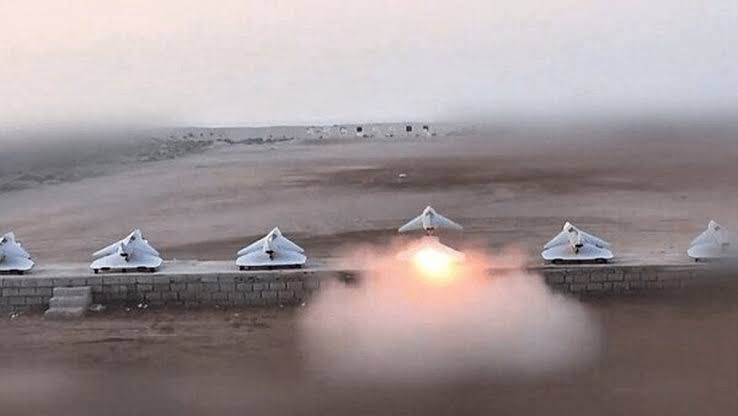
Kurdistan Counter-Terrorism said that at approximately 12:28 a.m. on Monday, August 17, two explosive-laden drones of the Hadid-110 type were launched from across the Iranian border toward the private office of the Kurdistan Region prime minister and the residence of the director of the Parastin Agency in Pirmam district, Erbil province.
The agency said no casualties were reported.
“We condemn these attacks and aggressions in the strongest terms; they are entirely unacceptable, and the perpetrators bear full responsibility for the consequences,” Kurdistan Counter-Terrorism said.
The statement did not report casualties or provide details of the extent of property damage caused by the attack.
The incident nonetheless represents a significant escalation because the targets included senior Kurdistan Region government and security institutions.
Kurdistan Human Rights Commission condemns attack
The Independent Human Rights Commission in the Kurdistan Region also condemned the attack, describing it as a destructive drone assault.
The commission said that although the attack fortunately caused no casualties, the incident underscored the need to protect the security and lives of civilians.
“Protecting the security and lives of citizens is a fundamental right,” the commission said, adding that under no circumstances should the territory of the Kurdistan Region be turned into a stage for military attacks or the delivery of political and military messages.
The commission’s statement placed the attack within the broader context of regional tensions and warned against allowing the Kurdistan Region to become an arena for military confrontation.
What is the Hadid-110 drone?
The drones identified by Kurdistan Counter-Terrorism as Hadid-110 are described as Iranian-made, high-speed unmanned aircraft designed for rapid penetration and attacks against sensitive targets.
Available specifications cited for the system include a top speed of approximately 510 kilometers per hour, reportedly making it one of Iran’s fastest drones. The drone is powered by a turbojet engine and is capable of operating at altitudes of up to approximately 9 kilometers.
The reported endurance is up to one hour, while its range is estimated at approximately 350 kilometers.
The Hadid-110 is reported to be capable of carrying approximately 30 kilograms of explosives. Its design is intended to allow it to rapidly enter defended airspace and strike targets such as radars, command centers, sensitive military positions and critical infrastructure.
The system was reportedly first used operationally by Iran’s Islamic Revolutionary Guard Corps (IRGC) in March 2026 during the conflict involving Iran, Israel and the US.
Iran has not publicly disclosed the drone’s production cost. Estimates have placed its cost between approximately $20,000 and $50,000.
A broader sovereignty and security concern
The attack has generated concern in the Kurdistan Region because it targeted senior government and intelligence-related locations while originating, according to Kurdistan Counter-Terrorism, from across the Iranian border.
The statements issued by Nechirvan Barzani, Masrour Barzani, Qubad Talabani, Barzani Headquarters and the Independent Human Rights Commission share a common message: the Kurdistan Region should not be drawn into regional military conflicts and Iraqi territory should not be used for attacks against the Region.
Nechirvan Barzani’s call for Baghdad to fulfill its constitutional responsibilities also highlights the longstanding dispute over responsibility for protecting Iraqi airspace and territory.
The latest attack comes amid a broader period of regional instability in which Iraq and the Kurdistan Region have repeatedly faced security threats linked to conflicts beyond their borders.
Kurdistan Region officials have consistently maintained that the Region should remain outside regional military confrontations and that its territory and institutions must not be used as targets or platforms in conflicts involving neighboring states.
The absence of casualties in Monday’s attack prevented a potentially more serious escalation. However, the targeting of the prime minister’s private office and the residence of the head of the Parastin Agency has been characterized by Kurdistan Region leaders as a significant escalation requiring a response focused on protecting sovereignty, security and civilian life.