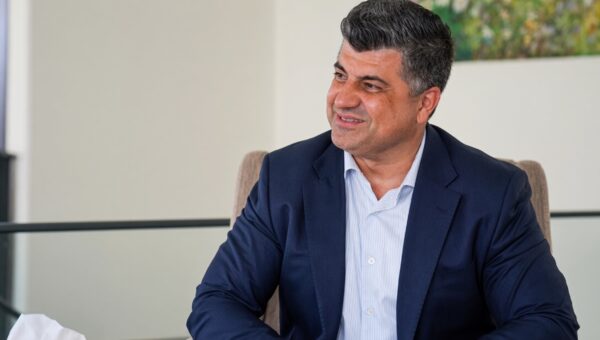
SLEMANI — The Iraqi Federal Supreme Court has rejected a request by Ali Hama Saleh, leader of the Halwest (Stance) Movement, to temporarily suspend the salaries and financial allowances of members of the sixth term of the Kurdistan Parliament pending a ruling on his lawsuit challenging the legitimacy of the legislature.
Through his lawyer, Hama Saleh had asked the court to issue an urgent injunction, known as an Amr Wala’i, preventing the disbursement of parliamentarians’ financial entitlements until the main lawsuit was resolved.
The request argued that suspending the payments was necessary to protect public funds and prevent financial consequences that could be difficult to reverse if the court ultimately ruled against the continuation of the current parliamentary term.
In Decision No. 13/Federal/Urgent Injunction/2026, the Federal Supreme Court determined that the legal requirements for issuing an urgent injunction had not been satisfied, particularly the requirements concerning urgency and ensuring that such a measure would not alter the fundamental basis of the disputed right.
Under Article 94 of the Iraqi Constitution, decisions of the Federal Supreme Court are final and binding. As a result, members of the Kurdistan Parliament will continue to receive their salaries and allowances unless a subsequent ruling in the main lawsuit determines otherwise.
Hama Saleh said his broader lawsuit seeks the dissolution of the Kurdistan Parliament and a ruling that the current Kurdistan Regional Government should operate as a caretaker administration.
He said the request to suspend parliamentarians’ salaries was among the measures sought through the case, with the aim of protecting public funds and establishing the legal status of the region’s institutions.
Hama Saleh also said he had personally refrained from collecting his salary for seven months and had requested that his payments be suspended because he was uncertain whether accepting the salary was legally justified. He added that he continues to work daily to serve citizens.
The case comes nearly two years after the Kurdistan Parliament elections, which were held on October 18 and 20, 2024, under the supervision of Iraq’s Independent High Electoral Commission (IHEC).
According to preliminary figures announced by IHEC on October 21, 2,899,578 people were eligible to vote, while 2,087,972 cast ballots, putting voter turnout at approximately 72%.
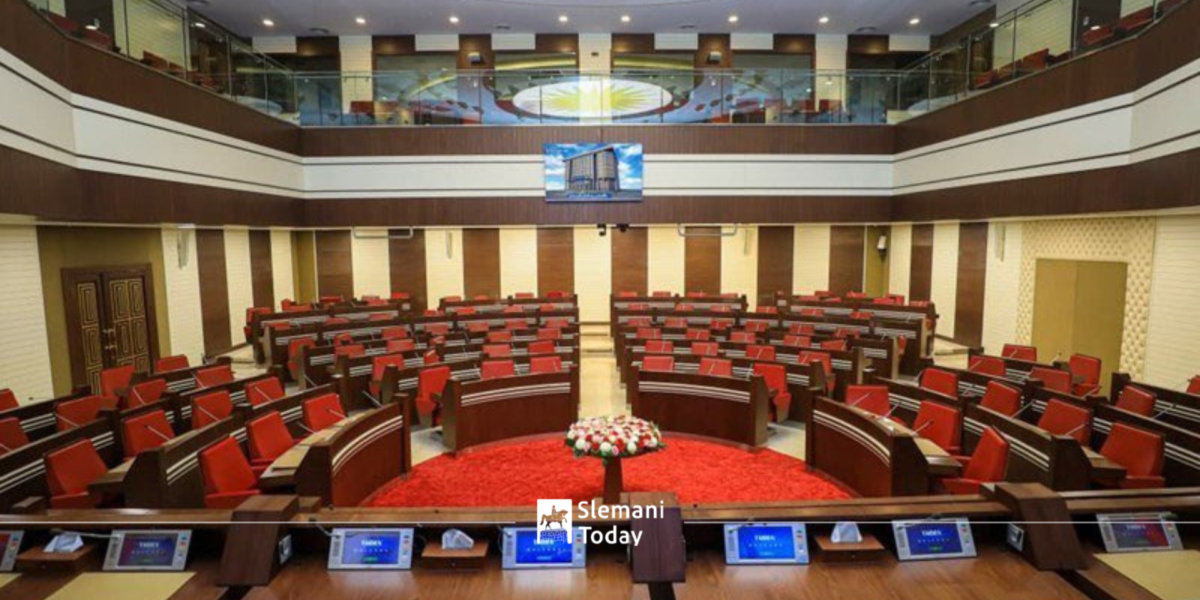
The sixth-term parliament held its inaugural session on December 2, 2024, with Mohammed Suleiman, the oldest member, presiding over the sitting. A total of 97 lawmakers took the constitutional oath.
The parliamentary distribution included 39 seats for the Kurdistan Democratic Party (KDP), 23 for the Patriotic Union of Kurdistan (PUK), 15 for the New Generation Movement, seven for the Kurdistan Islamic Union (Yekgirtu), five minority seats, four for the Halwest Movement, and one seat each for the Kurdistan Coalition, Gorran (Change) Movement and an independent lawmaker.
Several lawmakers did not attend the opening session, including Lahur Sheikh Jangi, Omar Gulpi and Abdulstar Majid.
Two lawmakers from the Kurdistan Justice Group (Komal) also boycotted the session in line with their party’s decision not to participate in the parliament or government after it described the 2024 elections as “pre-designed.” Hero Attar, however, attended the session despite the party’s position.
The Federal Supreme Court’s latest decision does not resolve Hama Saleh’s main lawsuit. It only rejects the request for an urgent measure to suspend parliamentarians’ financial entitlements while the broader legal challenge remains pending.