Slemani — The issuance of arrest warrants against two officials from Slemani-based Channel 8 has reignited debate over the legal framework used in cases involving journalists and media organizations in the Kurdistan Region.
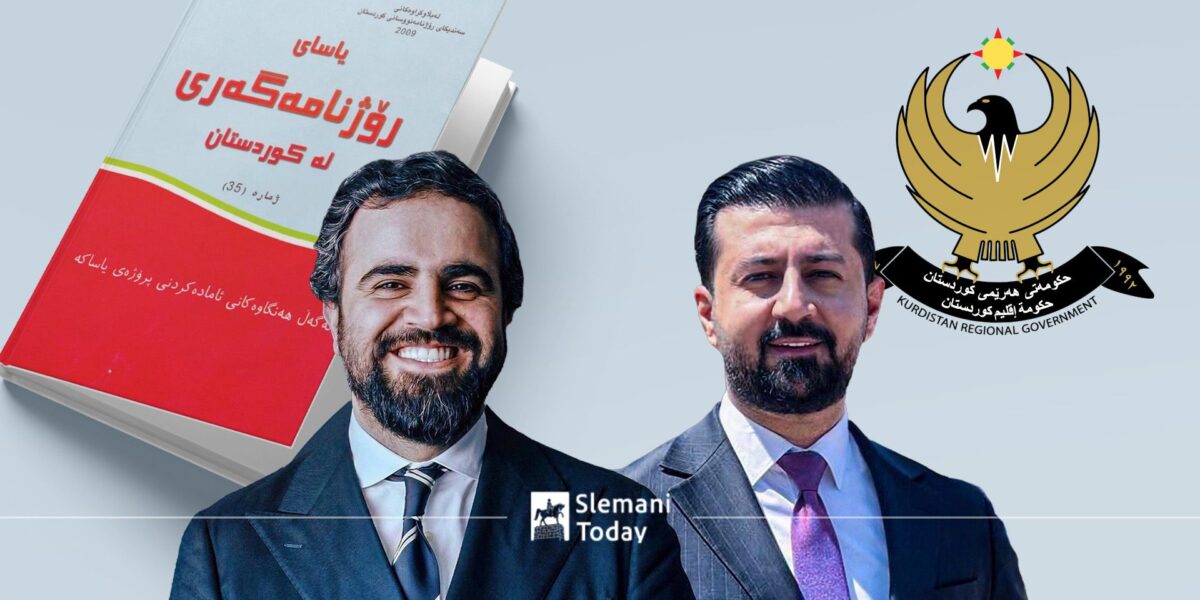
According to media reports, arrest warrants were issued for Ahmed Najm, head of the board of Channel 8, and presenter Bjar Dabagh. Critics of the move argue that the case should have been handled under the Kurdistan Region’s Press Law No. 35 of 2007, which specifically regulates media activity, rather than under Law No. 6 on the Misuse of Telecommunications Equipment.
The warrants were reportedly issued following a complaint filed by Kurdistan Region Interior Minister Rebar Ahmed. Details of the allegations and the legal proceedings have not been fully disclosed publicly.
The case has drawn criticism from media advocates and press freedom organizations, which contend that authorities are increasingly relying on laws outside the Press Law when pursuing legal action against journalists and media outlets. They argue that the Press Law was enacted to provide a specific legal framework for addressing disputes and alleged violations related to journalistic work.
Supporters of this view point to Law No. 6 on the Misuse of Telecommunications Equipment, which was originally introduced to address offenses such as threats, harassment, defamation, and the misuse of telecommunications and internet services. They argue that applying the law to media-related activities risks blurring the distinction between professional journalism and other forms of communication.
Government officials and supporters of the use of Law No. 6 have maintained in previous cases that no individual, including journalists, is exempt from prosecution under laws that address alleged criminal offenses. They argue that authorities are entitled to pursue legal action under any applicable legislation when they believe a violation has occurred, regardless of a person’s profession.
The controversy reflects a broader debate that has persisted for years in the Kurdistan Region regarding the balance between press freedom and legal accountability. Journalist rights organizations have repeatedly called for greater reliance on the Press Law when handling cases involving media professionals, while authorities have maintained that courts ultimately determine which legal provisions apply to individual cases.
As of now, neither the Kurdistan Regional Government nor the Ministry of Interior has publicly issued a detailed statement addressing criticism over the legal basis of the warrants. The case is expected to attract significant attention from media organizations, legal experts, and press freedom advocates as it proceeds through the judicial system.