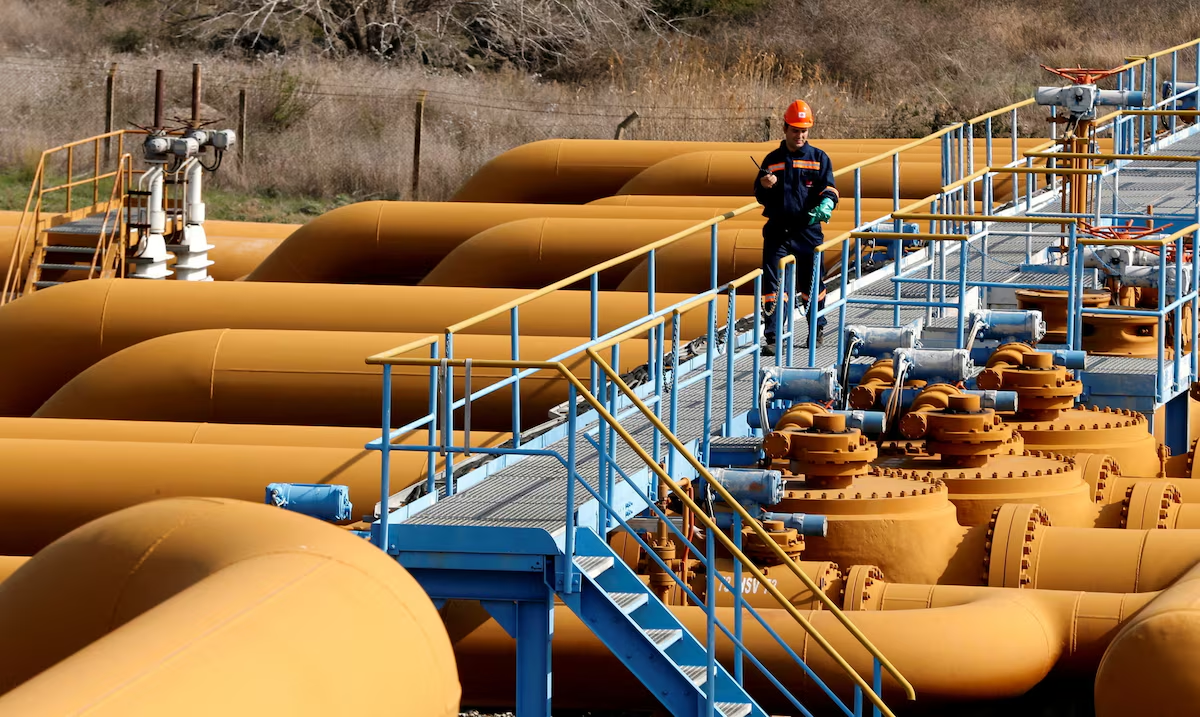
Slemani — Oil production from fields in the Kurdistan Region has declined by 50,000 barrels per day (bpd), reducing exports through the Iraq-Türkiye pipeline to the Turkish port of Ceyhan, according to a source from Iraq’s North Oil Company.
The source said production in the Kurdistan Region’s oil fields has fallen from 180,000 bpd to 130,000 bpd. Data from July 18 showed that only 80,000 bpd were exported to Ceyhan via the Kurdistan Region’s pipeline, while the remaining 50,000 bpd were allocated to meet domestic fuel demand.
Meanwhile, oil production in Kirkuk has increased to 326,000 bpd, according to North Oil Company figures. Of that total, only 60,000 bpd are transported to Ceyhan through the Kurdistan Region’s export pipeline, while the remainder is directed to domestic consumption and refining.
The data also showed that 90,000 bpd of Kirkuk crude are supplied daily to the KAR Group for the production of gasoline, diesel and kerosene. An additional 38,000 bpd are delivered to the Qaiwan Group for refining to help meet local fuel requirements.
The source said the Iraqi government has formally requested that the Kurdistan Regional Government restore crude oil exports to levels seen before the recent Iran-Israel conflict, when exports averaged around 200,000 bpd.
International operators, including HKN Energy at the Atrush field, Gulf Keystone at the Shaikan field, and DNO at the Tawke and Peshkabir fields, continue production. However, the source noted that ongoing regional tensions remain a potential risk to maintaining or increasing production levels.
Crude oil exports from the Kurdistan Region through the Iraq-Türkiye pipeline resumed earlier this year after a prolonged suspension, following agreements between Baghdad and Erbil on export mechanisms and payments to international oil companies. Since exports resumed, production has remained below historical levels as operators gradually restarted output, while both governments have sought to increase export volumes to improve federal revenues and restore production to pre-suspension levels. Recent regional security tensions have added further uncertainty to efforts to expand oil output.