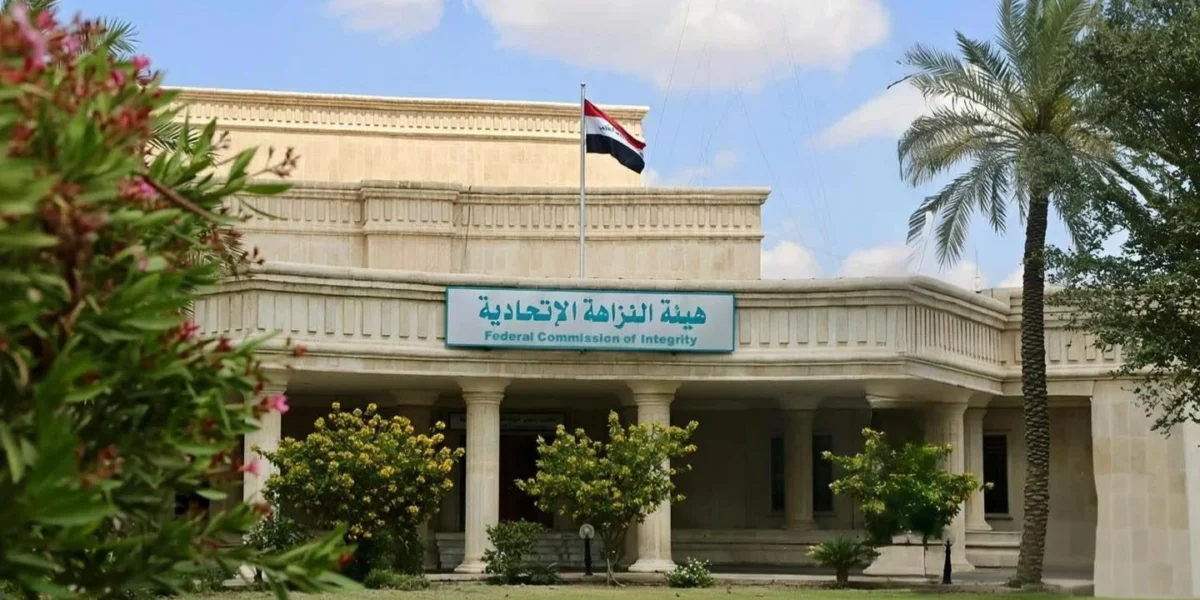
SLEMANI — Iraq’s Federal Integrity Commission said the Karkh Crimes Court has sentenced former Deputy Minister of Culture Sarbast Omar Hassan to six years in prison in absentia over legal and administrative violations linked to a 2014 contract to exhibit the ancient Nimrud Treasures in European museums.
According to a statement issued by the commission, the court found that Hassan was responsible for violations surrounding an agreement with the Danish company Exhibition Group Holding to transport and display the Assyrian artifacts in Europe. The commission said the contract resulted in the squandering of public funds and exposed the country’s cultural heritage to significant risks, harming Iraq’s vital interests.
The Integrity Commission said the Danish company was considered bankrupt and unreliable at the time the agreement was concluded. It added that the contract was signed without coordination with UNESCO and without obtaining the necessary legal consultation.
The commission also said the terms of the agreement were structured largely in favor of the company, while failing to provide adequate safeguards for the protection of the artifacts.
The case centers on the Nimrud Treasures, a collection of gold jewelry, ornaments and other precious artifacts dating to the ancient Assyrian civilization. The treasures were discovered in the late 1980s at archaeological sites in the Nimrud area of Nineveh Governorate and are regarded as among Iraq’s most valuable archaeological possessions.
During the years of conflict and instability, the artifacts were secretly stored in vaults at the Central Bank of Iraq to protect them from looting. They were recovered following the fall of Saddam Hussein’s regime in 2003 and subsequently came under state protection.
The Integrity Commission said the violations surrounding the 2014 exhibition agreement endangered artifacts considered irreplaceable national treasures.
The six-year sentence was issued in absentia, according to the commission, as part of Iraq’s ongoing efforts to prosecute cases involving corruption, misuse of public funds and the improper handling of the country’s cultural heritage.